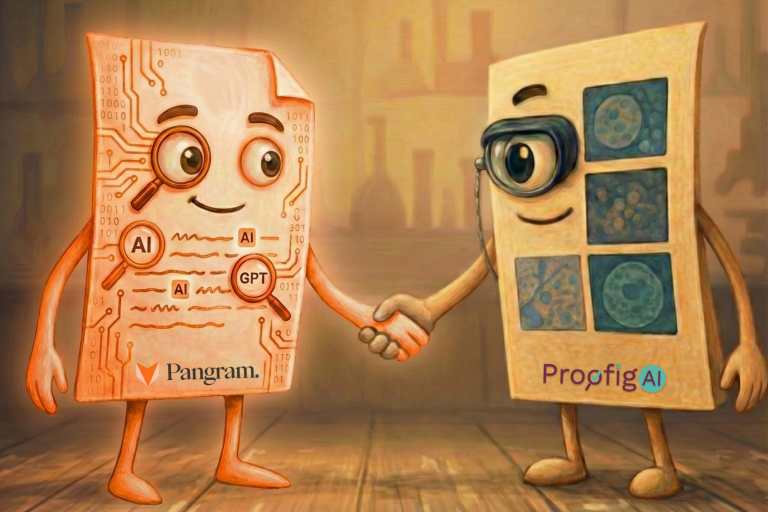

Until now, automated image-integrity screening has been limited to the life sciences. The tools were built for blots, gels, FACS and microscopy panels because that is where the visual evidence sat, and that is also where the integrity risk sat. Outside the life sciences, in computer science, economics, engineering, and the data-heavy fields more broadly, the figure that carries the scientific claim is usually a graph, a chart, a diagram, or a statistical plot. Those figures have largely sat outside the reach of automated integrity screening.
That gap is widening at the moment when scrutiny is increasing. AI-generated figures are getting harder to spot. Publisher and institutional integrity teams are being asked to screen more submissions, across more disciplines, with limited resources. The fields where visual evidence has been hardest to check are the same fields where the integrity pressure is now rising fastest.
Detection for Graphs, Charts, Diagrams, and Plots
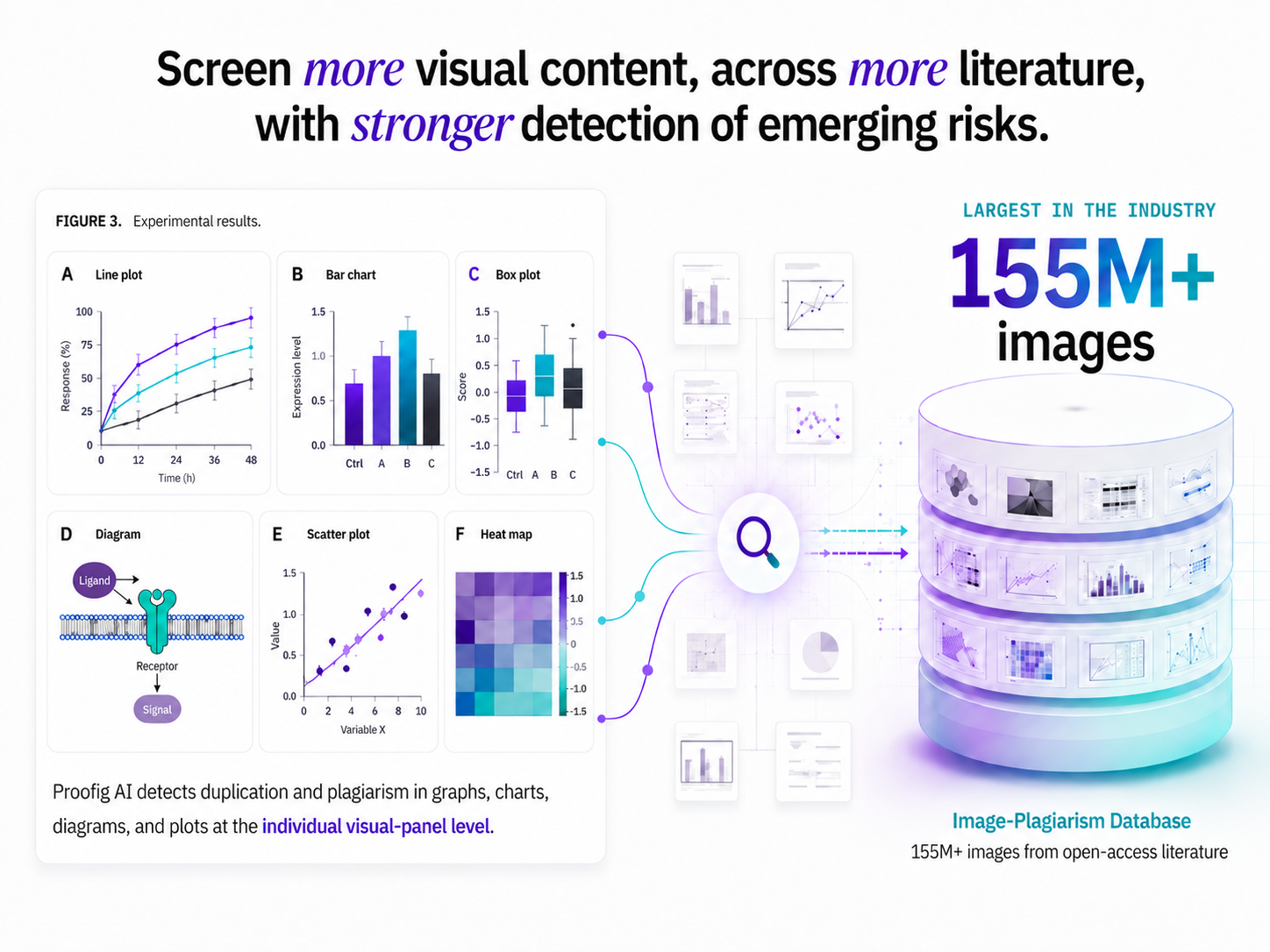
With its latest release, Proofig AI extends image-integrity screening into the graph- and data-heavy fields. Proofig AI is the only image-integrity platform to detect graph, chart, diagram, and plot duplication within manuscripts, and it identifies this reuse both within a single submission and against open-access literature. Detection runs at the individual visual-panel level rather than only at the level of full composite figures, so a reused graph appearing inside a larger composite figure, with modified labels or different surrounding panels, is now within reach of automated review. That category of reuse has been difficult to catch at scale through manual screening, and it represents the bulk of how visual integrity risks actually show up in real submissions.
The Largest Image-Plagiarism Database
Backing that detection is an expanded comparison database of 155M+ images from the PubMed Open Source corpus, the largest image-plagiarism database in the industry. The larger and more focused the comparison base, the more reliably panel-level detection can surface meaningful matches rather than near-misses or false alarms.
Ready for Cross-Discipline Screening
Publishers running data journals and quantitative-field journals now have a screening layer that fits their actual figure types. Institutions running cross-discipline integrity programs can cover departments outside the life sciences without buying separate tools. Researchers in graph-heavy fields can now catch accidental reuse before submission, which is the least disruptive moment to catch it. Proofig AI helps users screen more visual content, across more literature, with stronger detection of emerging risks:
- For publishers, this means broader screening across more journal types.
- For institutions, it means stronger integrity oversight across more disciplines.
- For researchers, it means more opportunities to catch visual reuse and image-integrity risks before submission.
Also in This Release
This release strengthens several other parts of the platform:
- AI-generated image detection has been updated with new models and additional retraining, with continued focus on reducing false positives on legitimate scientific imagery.
- Configurable support for larger manuscripts and multi-upload workflows makes publisher-scale review more practical for high-volume integrity teams.
- Beta improvements to review efficiency help reduce noise from legitimate or redundant duplications.
- Detection accuracy and processing speed are improved across the platform.
Image integrity has always been a moving target. The forms of visual evidence keep changing, the manuscripts keep getting more complex, and the tools used to alter or generate images keep getting more sophisticated. This release reflects where the integrity challenge is heading: across more disciplines, more figure types, and more of the publication workflow.
Request a Demo
See how Proofig AI supports image-integrity screening across the disciplines and figure types that matter to your workflow.