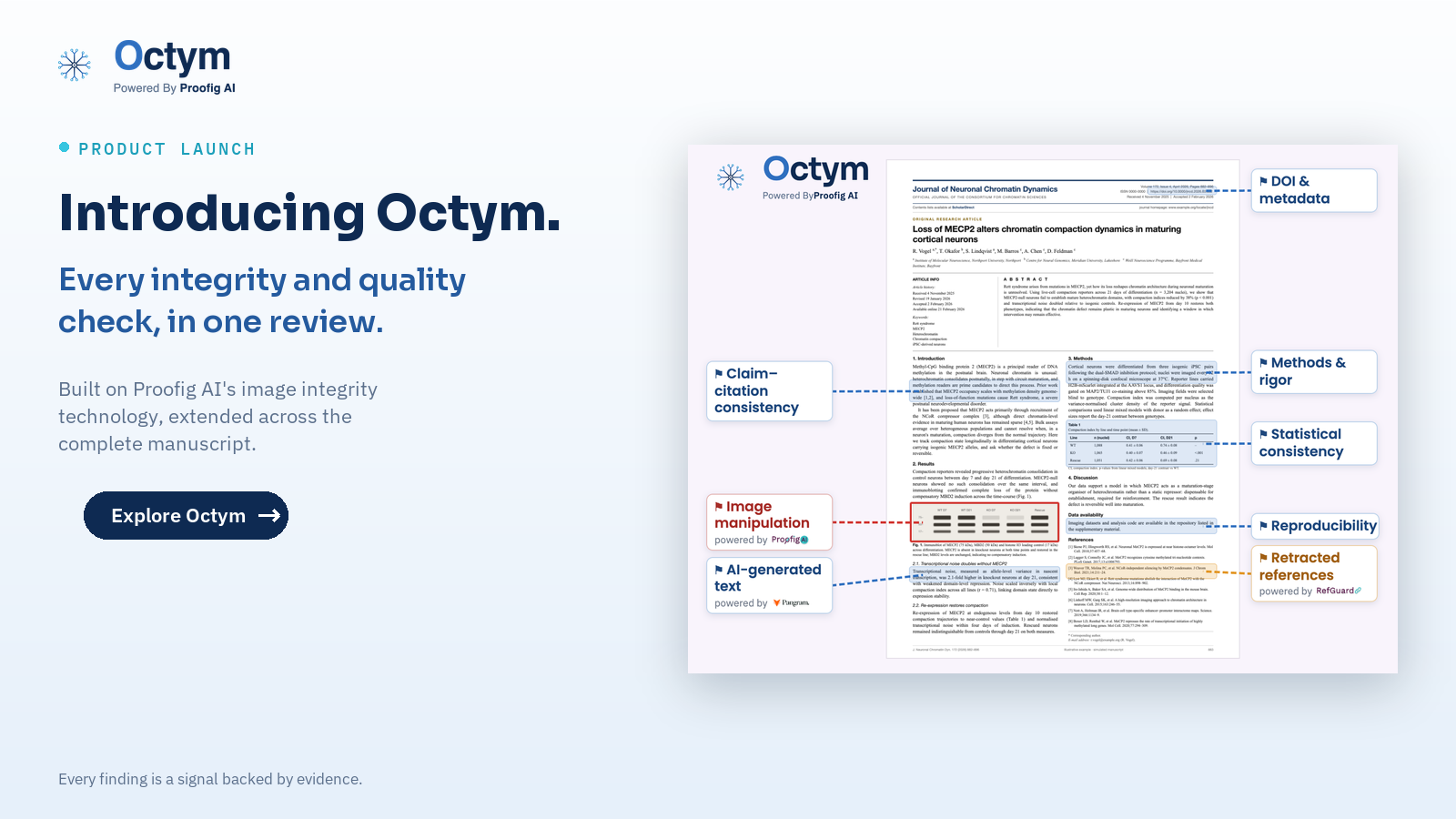

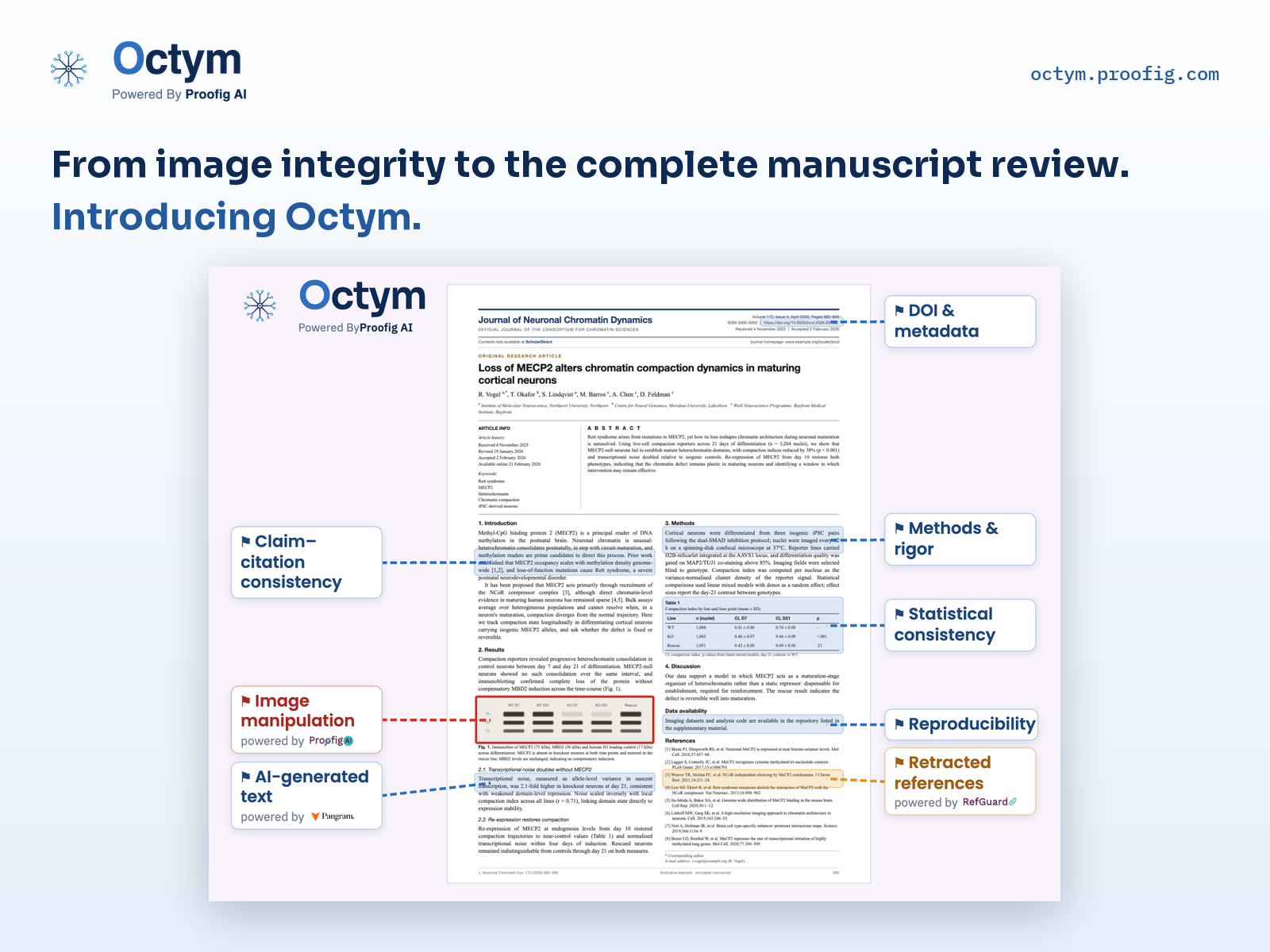
[August 17, 2026] — Proofig AI, the pioneering provider of automated image integrity solutions for scientific publications, today announced the launch of Octym, a comprehensive manuscript review platform that runs every integrity and quality check on a manuscript in one review, for researchers, research institutions, publishers, and integrity and investigation teams. The launch extends the company from image integrity into research integrity and quality across the full manuscript, and across the research lifecycle, from grant application to final publication.
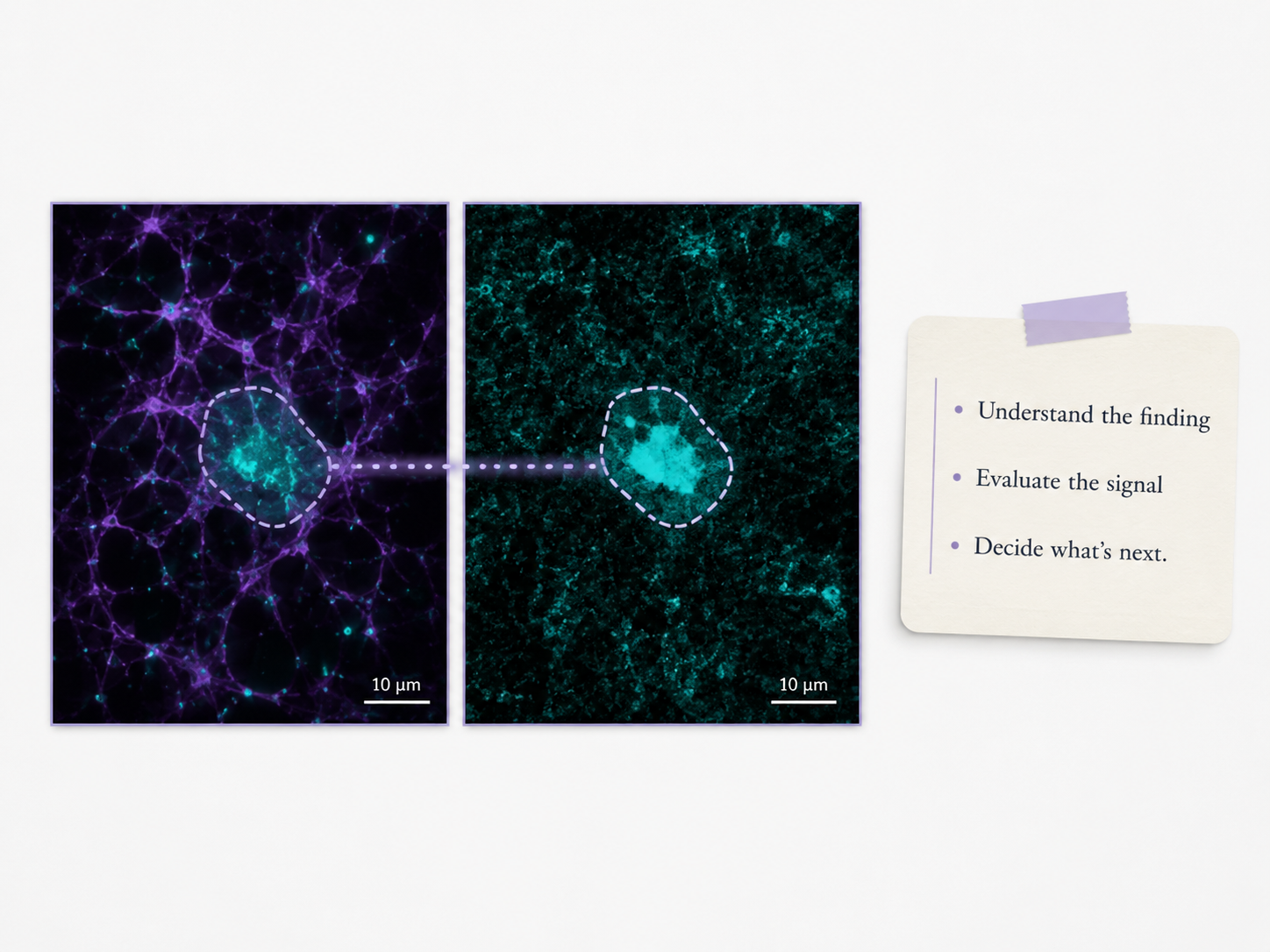
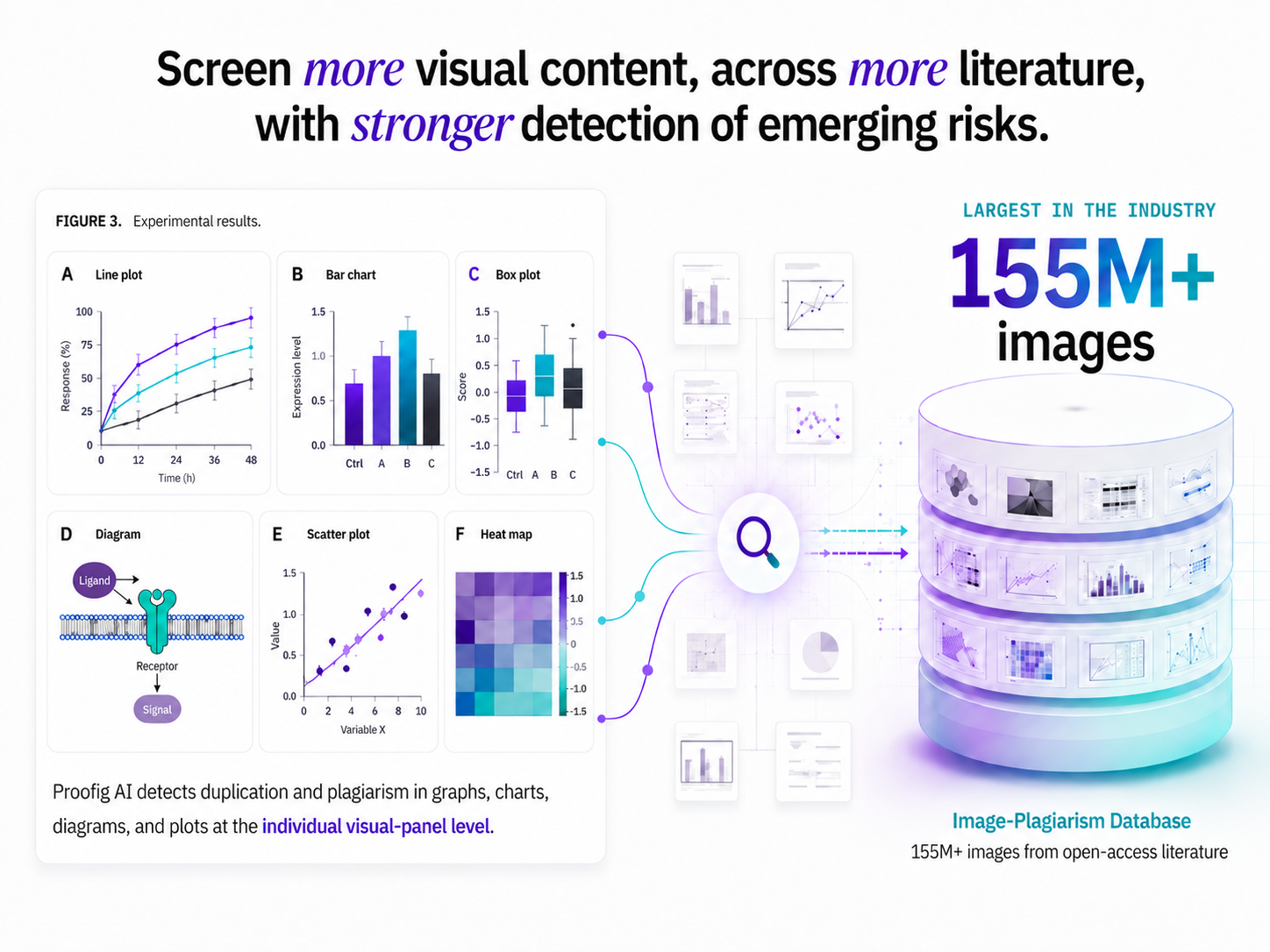
The launch marks the widest expansion of Proofig AI’s scope since the company was founded in 2017. Its screening has until now concentrated on what happens inside a figure: duplication, manipulation, image plagiarism, and AI generation. Octym extends that work across the manuscript, examining references, statistics, methods, citations, reporting requirements, and paper mill signals alongside the images, and catching problems at the moment they are easiest to address.
“A manuscript is not a set of independent parts, but that is how we have been checking it,” said Dr. Dror Kolodkin-Gal, founder and CEO of Proofig AI. “Every integrity check until now has lived in a different tool with a different report, and no one has been positioned to see the pattern across them. Octym examines a manuscript from every side until it holds, and it leaves the decision with the person responsible for it.”
Integrity and quality screening has grown fragmented as the number of available checks has increased. Image integrity, reference verification, statistical review, data and reporting compliance, text screening, and venue rules are typically handled by separate systems, each with its own login, report, and format. The people responsible, whether a researcher preparing a submission, an integrity officer working a case, or an editorial team screening a queue, interpret the results one tool at a time, which makes the pattern across them difficult to see. Findings that appear minor in isolation, but that together indicate a more serious problem, can surface late or not at all.
Octym returns one report for each manuscript, in which images, paper mill and citation-pattern signals, references, statistics, methods, citations, and reporting requirements are weighed together and ranked by severity, and every finding is marked on the page it came from. The review covers image and figure integrity powered by Proofig AI, AI-generated image and text detection, with text signals powered by Pangram, paper mill and citation-pattern signals, retracted and hallucinated references powered by RefGuard, statistical validation and consistency, and methods, rigor and reproducibility.
The quality half of the review reads the science the way a reviewer would: whether the study design holds, with its controls, randomization, and power; whether the methods are complete enough to reproduce; and how the claim sits against the work already published. Reported statistics are recomputed rather than taken at face value, and impossible or contradictory numbers are flagged.
The checks themselves are constant; what changes is what the manuscript is measured against. A researcher preparing a grant application can check it against the funder’s own criteria, including NIH R01 and R21, ERC, Horizon Europe, Wellcome and Gates, before it is submitted. A research institution can hold every manuscript to its own policies, for every funder, lab, and department, before the work leaves the institution. A publisher can run it from submission screening to post-publication review, for editorial and integrity desks alike, with two titles at the same desk running entirely different review profiles, and the pattern visible before editor and reviewer time is spent. Every Octym account is configured and adjusted by a dedicated Octym team, to each customer’s requirements and rules.
Every review can also be questioned directly. Octym’s agent answers from the manuscript itself, whether the question is why a figure was flagged, where the reproducibility gaps are, or whether the ethics statement holds, with every claim linked to its source.
Findings are presented as signals rather than conclusions. Octym surfaces suspected issues with the evidence behind them and does not accuse authors, and decisions remain with people. Manuscripts are analyzed on secure, private servers and are not used to train AI models.
The launch is an evolution, not a replacement: Proofig AI remains available on its own for customers who require image integrity screening only, and it powers the image checks inside every Octym review.
Octym is available now, and existing Proofig AI customers can request a trial. Researchers, research institutions, publishers, investigation teams, and ethics committees can contact Proofig AI for information on access and deployment.
To learn more about Octym, visit octym.proofig.com. For the full Proofig AI product line, visit proofig.com, or contact Proofig AI at contact@proofig.com.
About Proofig AI
Proofig AI is a leading global provider of automated research integrity and quality solutions for science, helping researchers, institutions, and publishers publish with peace of mind. Proofig AI has evolved from image integrity to the complete manuscript review with Octym, its manuscript review platform. Proofig has been adopted by the Science family of journals and is trusted by researchers, publishers, and research institutes worldwide. For more information, please visit proofig.com.