
Automated image-integrity screening has become very good at surfacing suspected findings. A duplication, a possible manipulation, a figure that resembles something already published: detection is often the easy part. The harder part comes next. Someone has to look at the flagged finding, decide whether it is meaningful, judge how strong the evidence is, and choose what to do about it. That interpretation step has always required a level of image-integrity expertise that not every reviewer has. Proofig AI’s new Review Assistant is built for exactly that step.
That is where the pressure now sits. More manuscripts are being screened, by more people, across more roles. Editors, authors, and institutional staff are increasingly the ones looking at a flagged figure, often without a forensics background. The result is a familiar bottleneck: the system finds something, and the person in front of it is not sure how seriously to take it, or what to do next.
The Review Assistant, Built Into Your Workflow
With its latest release, Proofig AI introduces the Review Assistant, a side panel that sits directly inside the review workflow. For each suspected finding, it explains, in plain language, what Proofig AI found and what it may mean. It shows how strong the underlying signal is, how serious the concern would be if the finding were confirmed, and a recommended level of attention. It suggests concrete checks to inspect the evidence, and it offers follow-up steps tailored to the reviewer’s role, whether that is an editor, an author, or a research integrity officer. The comparison image stays the primary evidence. The guidance simply sits alongside it.
The goal is not to decide for the reviewer. The Review Assistant is decision support, not a verdict. It helps a reviewer understand a finding and choose an appropriate next step, and it is especially useful for newer reviewers and for anyone who is not an image-integrity specialist.
Signal Is Not a Verdict
The Review Assistant deliberately separates two things that are easy to confuse. The signal describes how strong the technical evidence is. The concern describes how serious the issue would be if it were confirmed and left unexplained. A strong signal is not the same as a confirmed problem, and treating the two as one is exactly how legitimate figures get over-flagged and real issues get rushed. By keeping them apart, the Review Assistant lets a reviewer weigh the evidence with context, and keeps the final judgment where it belongs, with the person doing the review.
Seeing Where a Western-Blot Signal Comes From
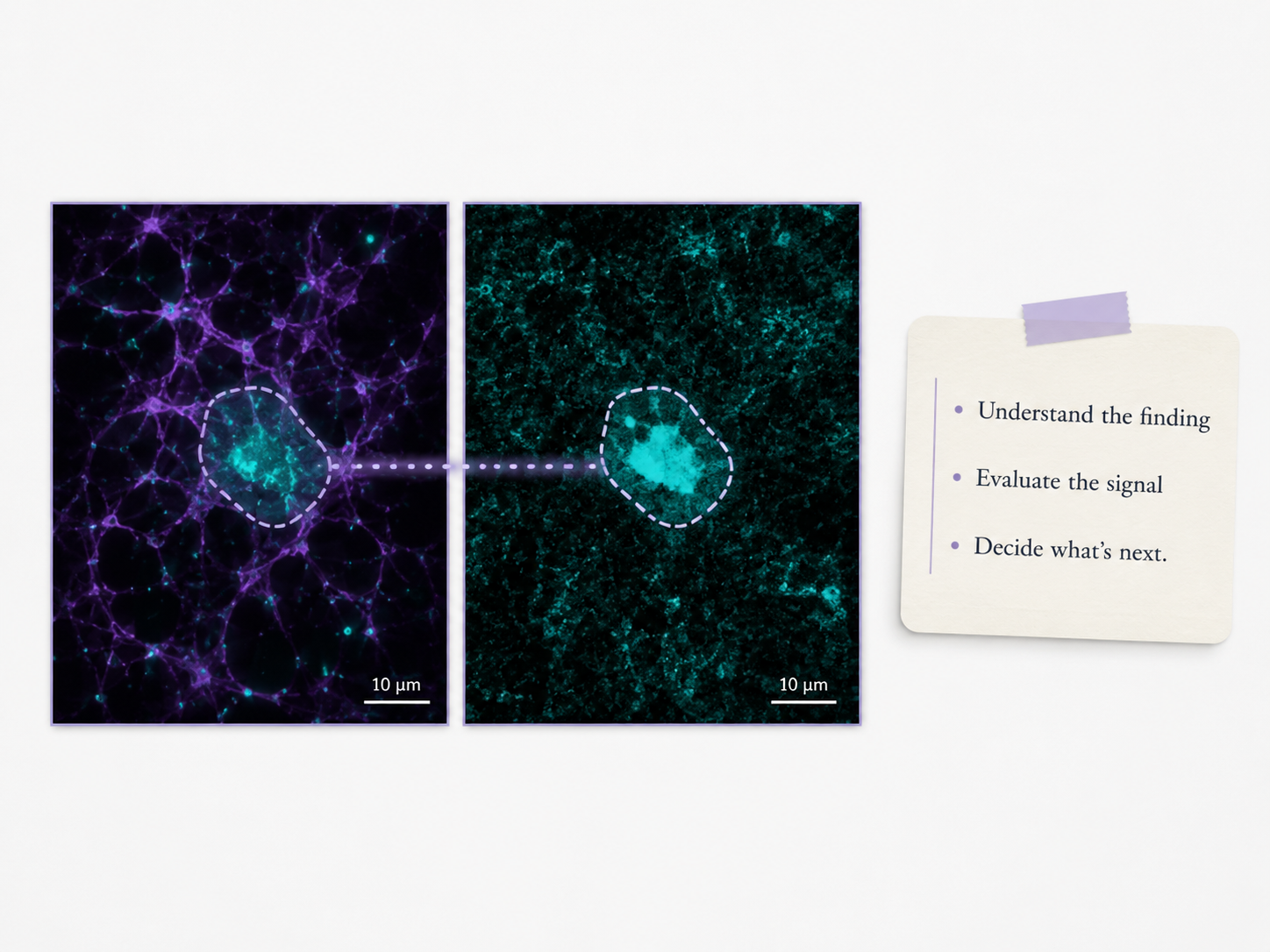
This release also adds a heatmap for western blots. When a western blot is flagged for suspected manipulation, the heatmap highlights the specific region of the image that contributed to the signal. Instead of assessing the whole blot blind, a reviewer can see exactly where to look and verify the finding faster. It is a step toward greater transparency: the highlighted area shows where a signal was detected, not proof that manipulation occurred.
Built for Everyone Who Reviews
Image-integrity review is no longer the work of specialists alone, and this release reflects that:
- For researchers, it means understanding a flagged figure before submission, the least disruptive moment to catch an issue.
- For publishers, it means editorial staff can review findings faster and more consistently, without deep image-integrity expertise.
- For institutions and oversight teams, it means consistent, structured explanations and role-specific next steps across many reviewers.
The Direction of Image Integrity
Image integrity has always been a moving target. Detection will keep improving, but detection alone was never the whole job. This release focuses on the step that comes after the flag: understanding it, evaluating it, and deciding what to do, with clear guidance and human judgment at the center.
Try It in Your Next Review
See how the Review Assistant helps you understand each finding and decide what is next.