
Image Duplication Detection
Automatically catch repeated or reused images and visuals to protect your manuscript’s credibility.
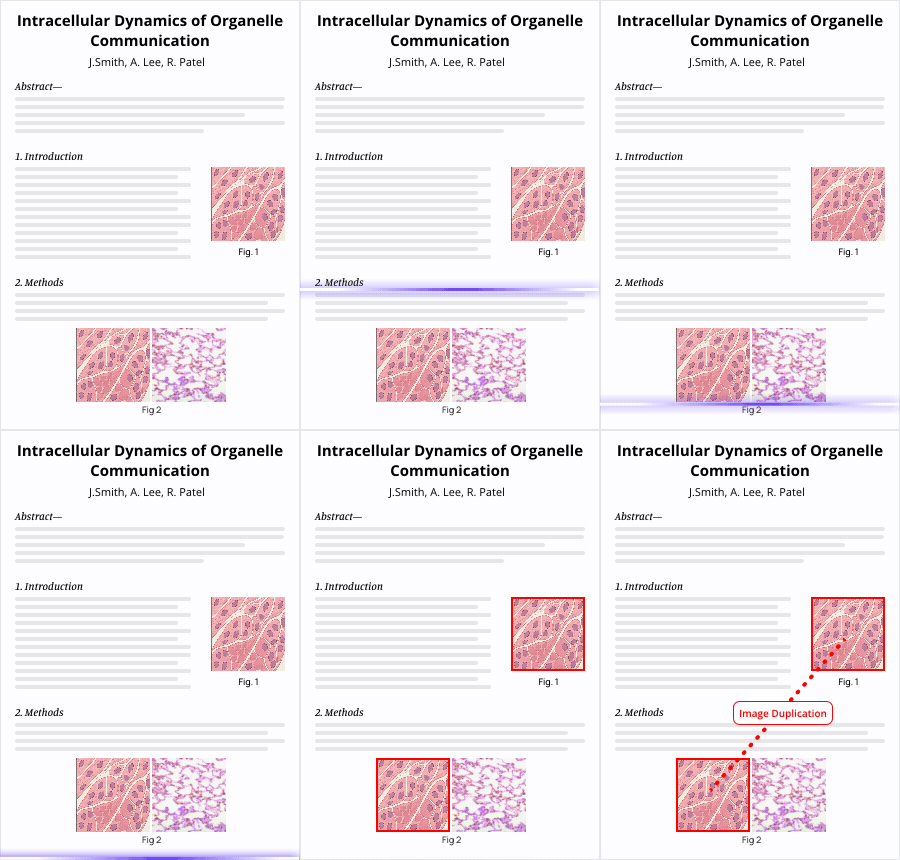
Why Duplication Matters
Roughly one out of every three manuscripts contains image integrity issues – many involve duplicated or reused images. These duplications distort findings, undermine trust and mislead reviewers and readers.
Data Misinterpretation
Duplicate images can distort findings and affect credibility.
Rejection or Retraction
May lead to editorial rejection before publication, or a formal retraction afterward.
Reputational Damage
Harms the credibility of authors, institutions, and journals alike.
Loss of Trust in Science
Erodes reader confidence and affects downstream research.
Comprehensive Detection Types
Proofig AI detects duplicated and reused manuscript visuals across scientific images, graphs, charts, diagrams, and plots. The system identifies reuse even when visuals have been resized, rotated, flipped, cropped, or partially overlapped.
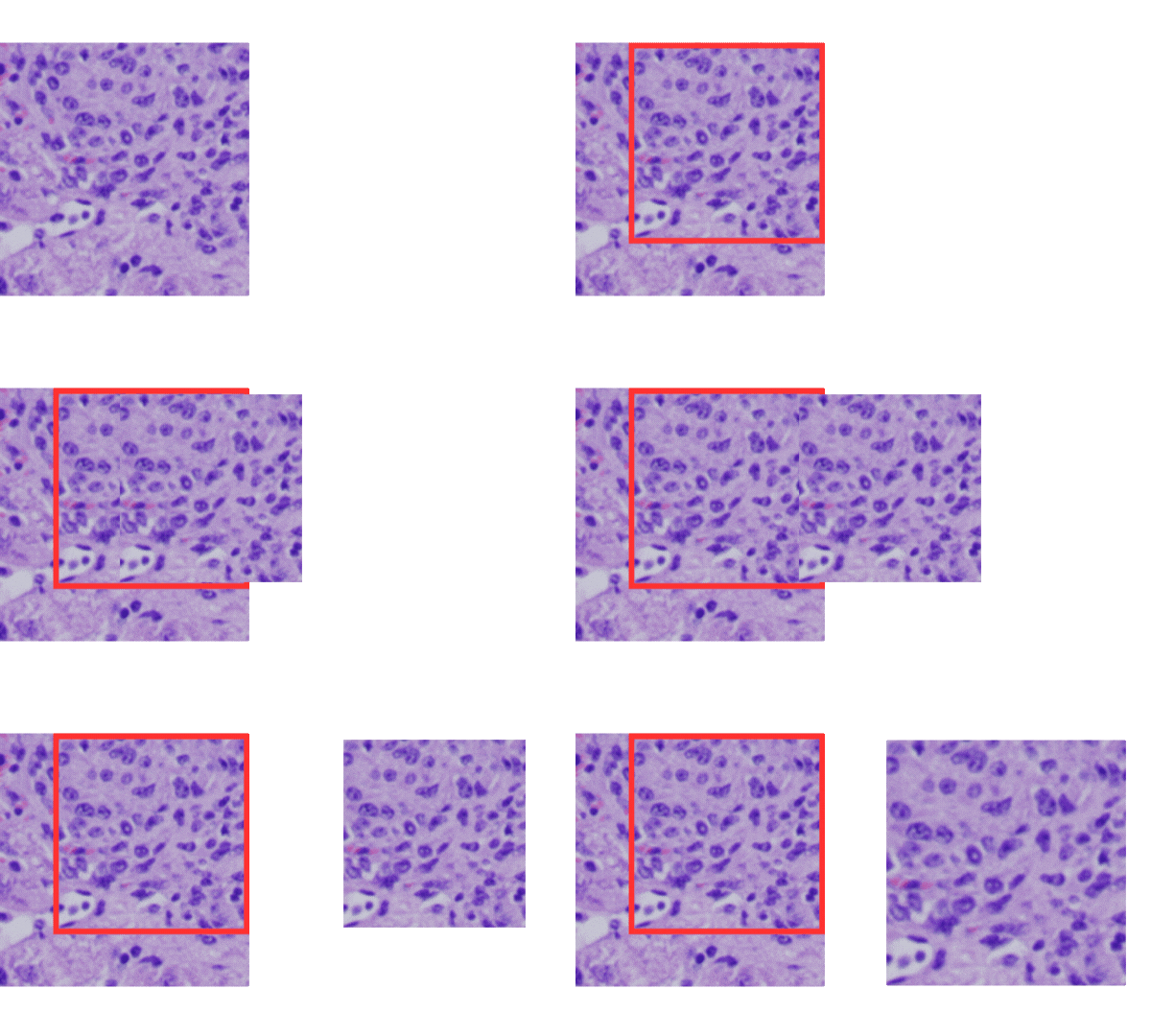
Scaling
Resized image presented as distinct data.
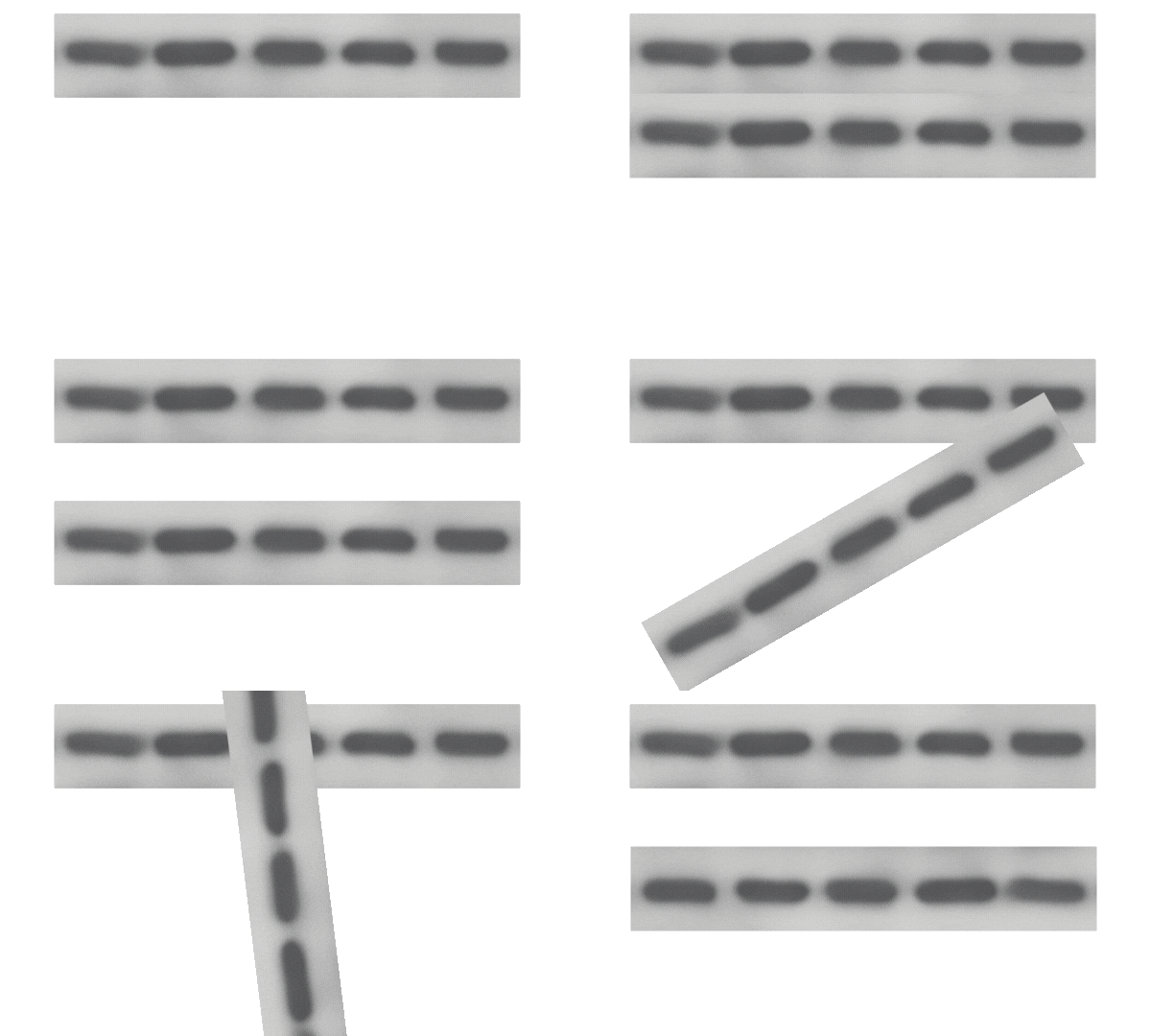
Rotation
Turned image to disguise repetition.
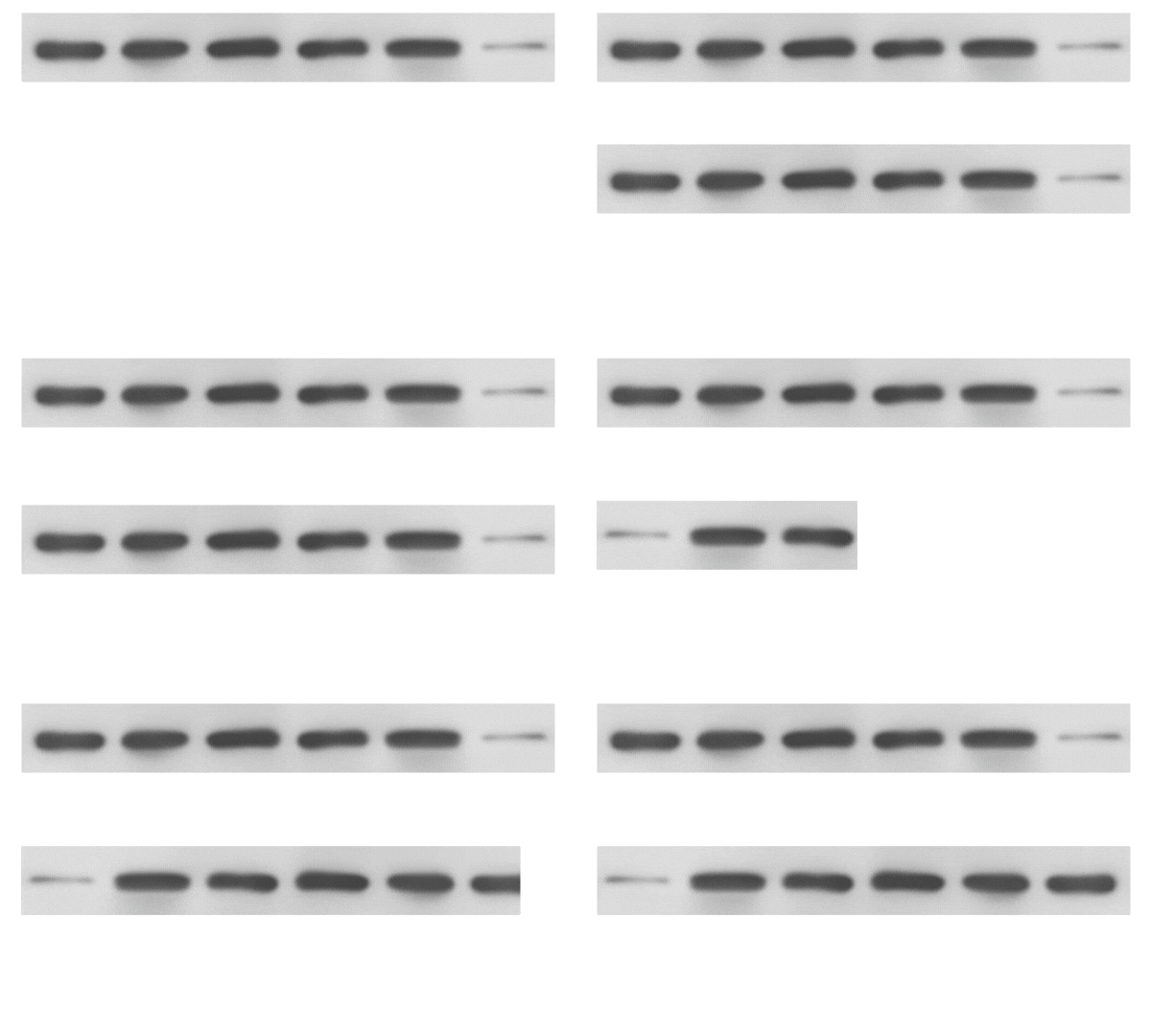
Flipping
Mirror image used to appear unique.
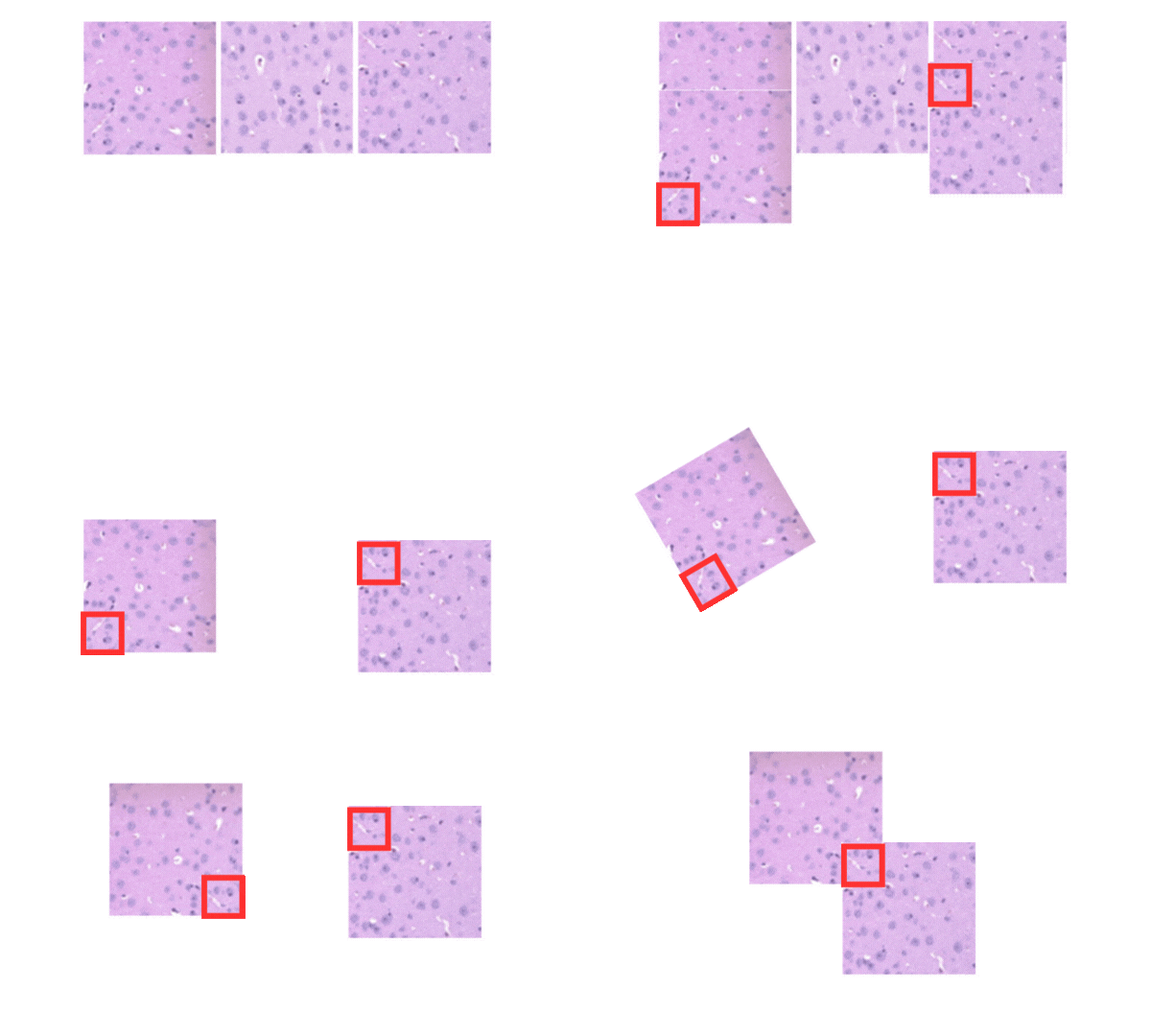
Partial Overlap
Cropped or shared region reused between images.
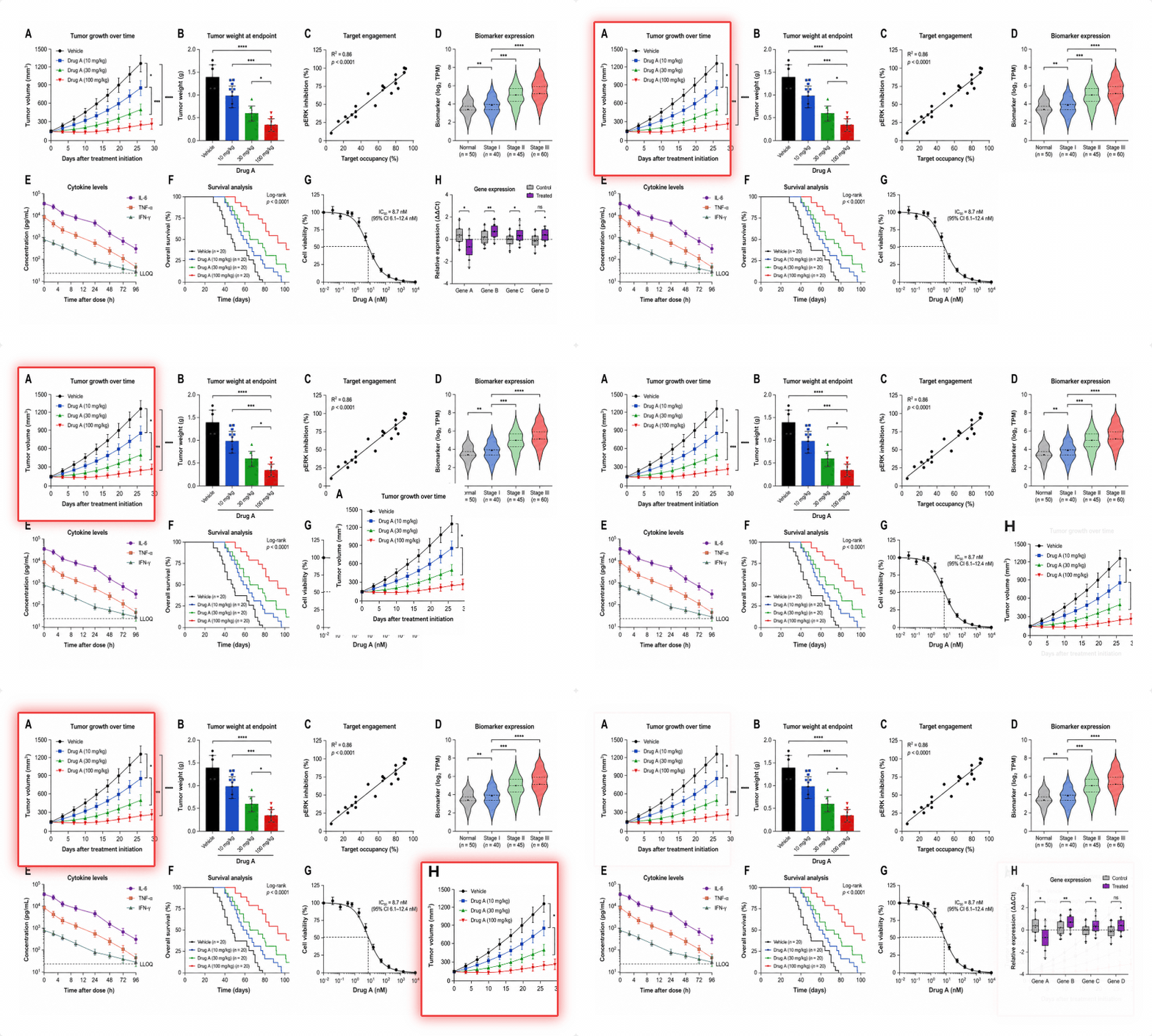
Graphs
Detection of graphs, charts, diagrams, and plots.
How It Works
Upload Your Manuscript Drag and drop your PDF or DOCX file—no formatting changes needed.
AI-Powered Analysis The system scans all images for potential issues—including duplication.
Review and Validate Check flagged items, investigate further, and decide what to include.
Download a Final ReportGet a detailed PDF report you can use to uphold research integrity within your lab or team.
Trusted by Leading Institutions and Publishers











250K+ Manuscripts
Scanned using Proofig AI to uphold research integrity
Global
Trust
Adopted by top-tier publishers, journals, and research institutions
Seamless Integration
Integrated into pre-submission and editorial screening workflows
Integrity Support
Used by researchers, editors, and ethics officers worldwide


Proofig helped us catch issues we would’ve missed entirely.
High-Impact Journal
Image duplication detection: frequently asked questions
What kinds of image duplication can be detected in a research manuscript?
Proofig AI finds images and visuals reused within a manuscript, even when the repeat was resized, rotated, flipped, cropped or only partly overlapping. Proofig AI compares every figure against the rest of the manuscript, across scientific images, graphs, charts, diagrams and plots, and delivers results in minutes. Every finding is flagged for your review, and you decide what goes into the final report.
Is Proofig AI's duplication detection limited to Western blots?
No, Proofig AI finds duplicated images across every scientific image type, from microscopy, Western blots and FACS to graphs, charts and plots. That includes confocal, light and electron microscopy, gels, in-vivo and in-vitro images, plants and plates, in any scientific field. Because graphs and plots are covered, the check also serves computer science, data science, engineering and economics, where a repeated chart can misrepresent results just as a repeated micrograph can.
Can Proofig AI catch a gel or blot panel that was reused in another figure?
Yes, Proofig AI detects Western blot and gel panels reused within a manuscript, even when flipped, rotated, resized or partly overlapping another panel. Each suspected repeat is highlighted for inspection with forensic tools, and the Review Assistant explains how strong the technical evidence is. You decide which findings go into the final PDF report, for submission or internal use.
What should I do when Proofig AI flags a duplicated image?
Open the finding and read Proofig AI’s Review Assistant, which explains what was found, what it means and how strong the evidence is. Some duplications are legitimate, such as an intentional, methodologically valid reuse, so the platform supports your judgment rather than issuing a verdict. Then correct the figure before submission, document the reason, or leave the finding out of the report.
Can Proofig AI check many manuscripts for duplicated images at once?
Yes, Proofig AI accepts one manuscript or many at once, or, on Enterprise, a REST API connection, and each manuscript gets its own report. Manuscripts in a batch are analyzed separately, not against each other, and every image inside each one is checked for duplication and reuse. To catch reuse from published papers, the image plagiarism check searches the industry’s largest image-plagiarism database, with more than 155 million PubMed Open Source Database images.
Can an honest duplicated image really lead to a retraction?
An honest duplication can still end in a retraction, and a single retraction can cost more than a million dollars in investigations and legal fees. Image problems are common: 20-35% of papers are flagged for image issues, according to Jana Christopher, and the retraction-cost estimate comes from Michalek et al. Honest errors and a collaborator’s mistakes still carry consequences for the principal investigator. Proofig AI finds accidental repeats before submission, while a figure is still easy to fix.
How reliable are Proofig AI's duplication findings?
Proofig AI delivers consistent duplication findings, validated on large real-world datasets of hundreds of thousands of manuscripts and millions of sub-images. Proofig AI, the image integrity platform trusted by the Science family of journals, counts 250K+ Manuscripts Scanned. Every finding is flagged for your review with forensic tools and the Review Assistant, so a flag never becomes a verdict on its own.
Further Resources

Journals can screen references at submission with a desk check of each manuscript's reference list before peer review. The desk check covers four problems: citations...
Proofig AI checks far more than images. Its image checks detect duplication, manipulation, plagiarism, self-plagiarism and AI-generated figures. RefGuard, Proofig AI's reference integrity product, flags...
To check that a citation supports its claim, read the claim, open the cited paper and ask whether the source says the same thing, something...
To detect hallucinated references before you submit, check each entry against the published record: open its DOI and confirm it leads to the same paper,...
To check whether a paper you cite has been retracted, open each reference at its DOI or journal page, look for a retraction notice, and...

AI-generated scientific images are entering the published literature, and visual inspection alone cannot reliably catch them. Proofig AI's AI-Generated Image Identification capability is built specifically...